At True, we call our approach to this Choose Fame. Fame in B2B rarely happens by accident. It is a choice a brand makes, and we believe it is a necessary one for any B2B brand that wants to grow.
This guide explains what B2B brand fame is, why it matters, how it shapes human and AI shortlists, and how brands can build and measure it.
What is B2B brand fame?
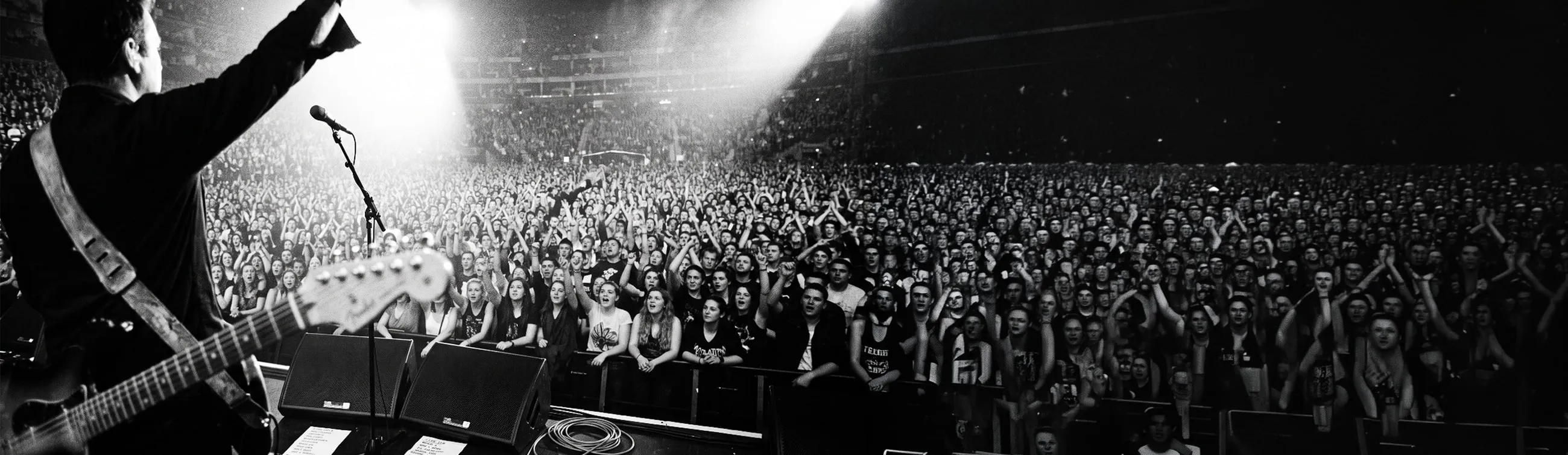
B2B brand fame is being widely known and talked about across a whole category, so that a brand comes to mind when a business need arises. It reaches everyone who might one day buy, including people who are not buying today and people not yet in a buying role.
Fame is more than awareness. A buyer can recognise a name when prompted and still never think of it when a need arises. Les Binet and Peter Field define a fame campaign as one that gets people talking about it and sharing it. The Ehrenberg-Bass Institute uses the term mental availability for the result: the likelihood that a brand is thought of in a buying situation. Jeremy Bullmore, the former chairman of J. Walter Thompson London, described this salience as "a kind of fame".
Fame is also social. A famous B2B brand is one that a buyer expects their colleagues and their board to know. That shared knowledge is what makes a famous supplier easier to recommend and easier to defend.
Why does fame matter in B2B?
Fame matters in B2B because, in the best available B2B data, it produces larger business effects than any other campaign objective. When Les Binet and Peter Field analysed the B2B cases in the IPA Effectiveness Databank, campaigns with fame as their main objective reported an average of 2.2 very large business effects. Campaigns aimed at short-term activation reported 0.7. Fame campaigns outperformed purely rational campaigns roughly tenfold.
Fame also makes the rest of marketing work harder. In the same analysis, B2B campaigns that strengthened the brand were far more likely to report very large short-term activation effects as well. Leads convert more readily when the buyer already knows and likes the supplier.
Lack of fame is what holds most B2B brands back. When Ehrenberg-Bass surveyed UK business banking customers, around one in ten said they would refuse to use a given bank. Nearly four times as many had never heard of it. Small B2B brands are small mainly because most of the people who might buy from them have never heard of them.
There is a human reason behind all of this. A B2B buyer puts their name to a decision that other people will judge. If it goes wrong, a well-known supplier is far easier to defend. The old line that nobody ever got fired for buying IBM has lasted half a century for good reason. Fame works as insurance against blame.
Why must fame be built before buyers enter the market?
Fame must be built in advance because about 95% of B2B buyers are not in the market at any given time. Professor John Dawes of the Ehrenberg-Bass Institute calls this the 95:5 rule. Businesses replace many suppliers only every few years, so only around one in twenty is buying in any quarter. By the time a buyer starts looking, the brands they remember have already been decided.
At True, we have written about the 95-5 rule of advertising and about the Seven-Year Switch, our research showing that 94% of a decision-making unit changes within seven years. The people who will buy from a brand in future are often not yet in a buying role, and only sustained fame reaches them.
How does fame influence the day-one list?
Fame also decides which brands are on a prospective buyer's day-one list, and the day-one list decides who wins. The day-one list is the handful of suppliers a buyer can name before they start searching or write a brief. In our research at True, 90% of B2B deals go to a supplier that was on it.
In our Rule of Three research at True, we found that buyers typically start with three brands. The list grows during evaluation, often to around ten, but the original three are still on it 97% of the time. Brands on the initial list were three times more likely to be bought than brands that were not. The pattern echoes a long-observed tendency for mature markets to settle around three leading players.
Independent research points the same way. 6sense's 2025 study of nearly 4,000 B2B buyers found that the winning supplier came from the day-one shortlist 95% of the time. Buyers made first contact with a seller about 61% of the way through their buying journey, by which point the decision was largely shaped.
This is why a formal RFP is often less open than it looks. The process frequently confirms a preference the buyer formed earlier. The famous supplier is invited. The unknown supplier has to hope.
How does fame affect AI recommendations?
AI assistants tend to recommend the brands that are already famous, because large language models learn from the same reviews and conversations that shape human memory. When a buyer asks an AI assistant for suppliers, it tends to name the brands buyers already know. AI has become a new member of the decision-making unit, and it favours fame.
This matters because most buyers now ask an LLM for support. 6sense's 2025 study found that 94% of B2B buyers use large language models during their buying process, and Forrester reports the same figure in its 2026 State of Business Buying.
At True, we tested the link directly. For several years we have tracked the first brands that human B2B buyers name unprompted, across categories and markets. In July 2026 we put the same 12 categories, in 6 markets, to three leading AI models. The brands the AI models named, and the order they named them in, matched the human answers closely, with a Spearman rank correlation of 0.95. The more mature the market, the closer the match.
Scale alone does not win the AI answer. Ask an AI for the best team messaging tool and it usually names Slack, even though Microsoft Teams has far more users. In our analysis at True, fame counted for more than market size.
For a famous brand, AI protects its place on the shortlist. An unknown brand is left off before any human has looked. Clear and well-sourced content helps AI find and quote a brand, but it does not replace fame. The most reliable way to appear in AI answers is to be the brand people already talk about.
How do B2B brands build fame?
B2B brands build fame by reaching the whole category with distinctive, emotionally engaging creative work, and by sustaining it for years. The evidence points to six practices.
- Reach the whole category, not only active buyers. In the IPA's B2B data, campaigns that reached customers and non-customers alike reported 1.6 very large business effects on average. Loyalty-focused campaigns reported none.
- Invest in share of voice. B2B brands that set their share of advertising voice above their market share tend to grow. Binet and Field found that 10 points of extra share of voice was linked to about 0.7 points of market share growth a year.
- Lead with emotion as well as fact. Emotional B2B campaigns reported 1.4 very large business effects against 0.2 for rational ones. Buyers remember how a brand made them feel long after they forget its features.
- Make creative work that gets talked about. The B2B Institute and System1 found in 2021 that about three quarters of B2B TV ads drive no long-term growth. Fame needs work that rises above category wallpaper. On the True B2B Creative Scale, that means work rated 7 (fame-driving) or 8 (iconic).
- Own the moments that bring buyers into the market. Ehrenberg-Bass calls these category entry points. Linking a brand to more of them widens the memories that bring it to mind. In Ehrenberg-Bass research on business insurance, each extra entry point a customer linked to their insurer lowered their likelihood of switching by about 5%.
- Stay consistent for long enough to compound. System1's Compound Creativity study, using IPA Effectiveness Databank data, found that the most consistent brands produced 27% more very large brand effects. Fame built over years is hard for competitors to take away.
How should B2B brand fame be measured?
B2B brand fame should be measured by how often a brand comes to mind among category buyers and AI assistants, tracked over years rather than quarters. Brand-building effects take more than six months to show, yet LinkedIn research found that only 4% of B2B marketers measure impact beyond six months. Most B2B scorecards therefore miss fame entirely.
| Measure | What it shows | How to track it |
|---|---|---|
| Day-one list presence | Whether buyers name the brand before they search | Ask category buyers, unprompted, which suppliers come to mind for a need |
| AI share of answer | Whether AI assistants name the brand, and in what position | Put category questions to leading AI models and compare the brand's rank with competitors' |
| Mental availability | How many buyers link the brand to how many buying situations | A category entry point survey, reporting mental penetration, network size and mental market share |
| Share of search | Interest in the brand relative to competitors, an early indicator of market share | The brand's share of branded search volume in its category |
| Extra share of voice | Whether investment is high enough to grow | Share of category advertising spend minus share of market |
| Talkability | Whether people discuss and share the brand's work | Earned media coverage, mentions and awards |
| Commercial effects | Whether fame is paying | Invitations to tender received unprompted, win rates and price realisation |
No single measure captures fame. The most useful combination pairs one human measure, such as day-one list presence, with one AI measure and one commercial outcome.
What does Choose Fame mean at True?
Choose Fame is our position at True: fame is the foundation of effective B2B marketing, and every B2B brand has to decide to pursue it.
Fame is a choice because it rarely happens by default. Many B2B brands make the opposite choice without ever quite deciding to. They target only the buyers who are ready to buy this quarter, and speak to them only in features and proof points. Then they change the message whenever a new marketing director arrives. Each decision looks prudent on its own. Together they amount to a decision to stay unknown.
Choosing fame means talking to the whole category, including the 95% who are not buying yet, and giving them something worth remembering. In B2B that usually means a feeling as well as a fact. It also means saying the same thing for long enough that it sticks.
Famous B2B brands are easier to defend and easier to charge properly for, and AI assistants name them first.
Further reading from True
- The 95-5 Rule of Advertising
- True B2B Creative Scale
- The Rule of Three in Every Purchase Decision
- Seven-Year Switch: Navigating the Shifting Sands of the DMU
- Capgemini Engineering on Brand: Why Fame Gets You Shortlisted
- Is your content built for the way AI now buys? (on-demand webinar)
About True
True is a London-based B2B creative and media agency and the only B2B specialist agency to hold IPA Effectiveness Accreditation. It was named ANA Global B2B Creative Agency of the Year in 2022 and is the UK partner of BBN International.