It was the late Anita Roddick, founder of Body Shop, who famously said: “Running a company on market research is like driving while looking in the rear view mirror.”
In other words, measuring what we’ve done already doesn’t necessarily tell us much about what we should do next.
Yes, the digital revolution has provided us with a heap-load of measurables, many of which are hugely powerful and useful. We can now target our online advertising to within an inch of someone’s life. We can precisely measure the click-through efficacy of any shape or type of website ad. Supermarket CRM programmes can predict when a couple is even trying for a baby. And email campaigns can be tailored far more precisely than direct marketing campaigns ever could be.
But… but… but.
Metrics and behavioural data are not ends in themselves. And sometimes what we do with them seems really dumb. For example, when I’ve just bought an espresso coffee machine on Amazon, what’s the point of the website then telling me what coffee machines other people bought? It’s not like I’m going to buy another one and build up a collection.
The danger of metrics is that they can seduce us into reductive thinking, whereby we come to believe that there is such a thing as the perfect online ad, the perfect email campaign, the perfect point size and layout for a newspaper ad. If we just follow the rules dictated by the evidence, we can go into marketing auto-pilot can’t we? Job done?
To quote one of the late Margaret Thatcher’s more memorable phrases: “No, no, no”.
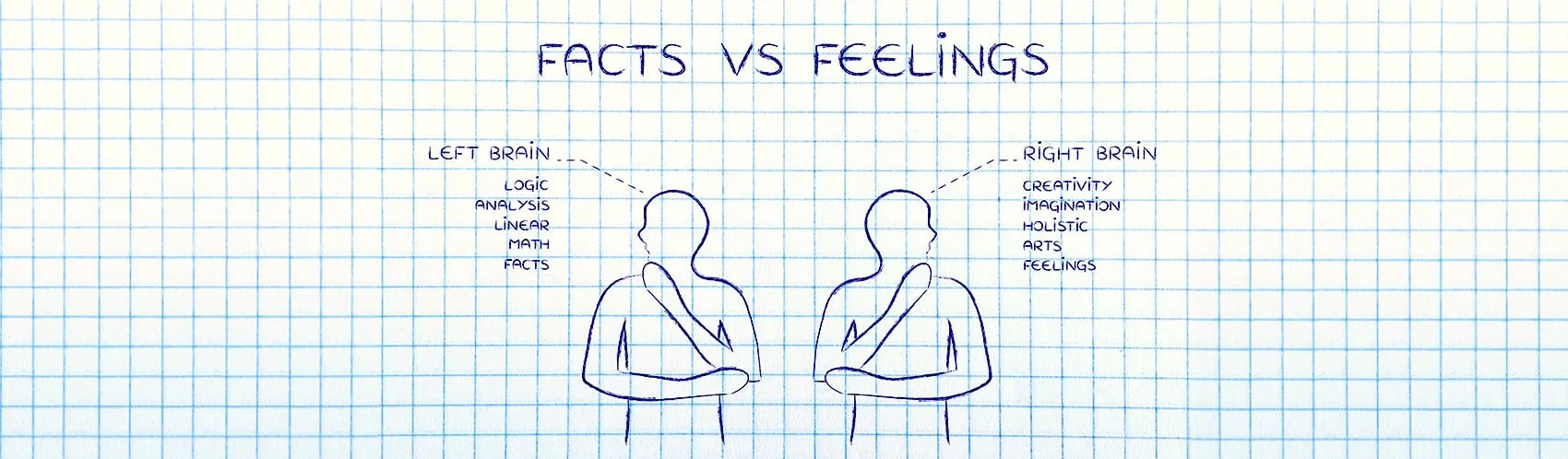
For where does that leave creativity and inspiration?
Rules are for fools…except when they’re useful
It’s always been tempting to believe there are definitive golden rules governing advertising and marketing. In the Sixties, “father of advertising” David Ogilvy did formulate his own, but even he eventually realised such an approach was far too restrictive.
Measuring the hell out of everything in the hope of reaching some utopia just won’t work. Utopianism leads to conformity, groupthink and dullness, when the whole point of marketing is to be different, engaging, and interesting. You can’t achieve that if everyone’s slavishly following the same set of rules, or designing to fit the data.
There isn’t a perfect fashion. Everyone understands that. There isn’t an optimum length for a skirt or an optimum material. There isn’t one style that we should all be aiming for. True, fashion has thrown up certain style icons over the years – Coco Chanel’s “Little Black Jacket” for example – and there are, analogously, certain ad campaigns that we justly celebrate as exemplars of the craft, but where we go wrong is to take these icons and use them as templates.
They became iconic because of their originality; you don’t achieve originality by copying icons.
That’s not to say there are no rules. In fact, we’re big fans of systematising the marketing process and adopting an engineering approach to it. But that’s about the process and execution, not the creativity that precedes it.